

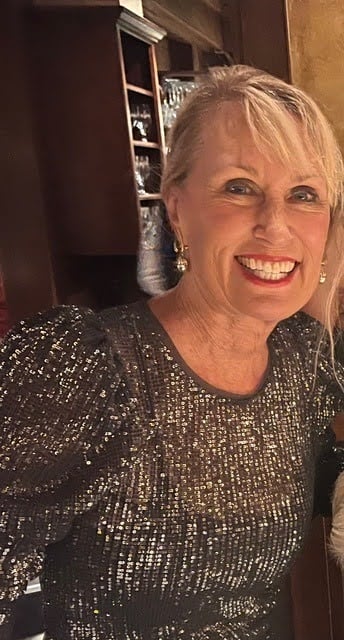
The most durable civic contributions are rarely the most visible ones. They are the commitments sustained across years of board service, governance work, and institutional investment that quietly shape how a community lives its values. Celeste White, a St. Helena-based entrepreneur, philanthropist, and nonprofit leader, has built exactly this kind of enduring record across the Napa Valley and Northern California.
Board service with The Salvation Army and Hospice. Trustee engagement at Westmont College. Founding leadership of Lux Forum. Estate agricultural production through Horse Rock Olive Oil on the family’s St. Helena ranch. Healthcare innovation through Stitches Medical and WearTootles.com. Board governance at Ag 4 Youth. Mentorship through the U.S. Pony Club. These commitments span agriculture, healthcare, emergency services, end-of-life care, higher education, youth development, and public intellectual life. The thread that connects them is not professional ambition. It is faith-informed values applied to practical, sustained service.
Understanding the faith dimension of that record, and what it contributes to a region like the Napa Valley, requires a closer look at the institutions involved and the governance commitments that sustain them.
Where Faith and Civic Purpose Converge in the Napa Valley
In communities anchored by agricultural tradition and strong local identity, the relationship between faith and civic life is often foundational. Faith-rooted institutions have historically provided much of the bedrock of American community life: emergency services, education, youth programming, and the moral frameworks that orient decision-making toward shared purpose rather than individual interest. St. Helena and the broader Napa Valley are no exception.
Celeste White’s faith-grounded governance work draws from that tradition without being confined by it. The Salvation Army and Westmont College are both explicitly grounded in Christian organizational identity. But they are also operationally engaged with the full spectrum of community life. The Salvation Army serves families in acute economic crisis. Westmont offers rigorous liberal arts education. That breadth reflects a philosophy that takes seriously both the immediate material needs of vulnerable community members and the longer-term intellectual foundations on which healthy communities depend.
Celeste White and The Salvation Army: Faith-Informed Governance in Practice
The Salvation Army delivers emergency food assistance, disaster relief, addiction recovery programming, and support for families in financial crisis across communities nationwide. Board service with a regional chapter is not a ceremonial responsibility. It demands governance competence, community credibility, and the capacity to hold together the dual imperatives of fiscal sustainability and mission fidelity.
What distinguishes faith-based service organizations is not simply organizational history. It is the particular orientation toward human dignity that shapes how services are designed, how client relationships are structured, and how the organization understands its own purpose. Governing these organizations requires board members who work fluently within that orientation while maintaining the analytical rigor and institutional accountability that effective nonprofit governance demands.
Faith, in this context, is not a credential or a public posture. It is a structural element of how long-term commitments to human-scale service are organized and sustained. Board leadership at The Salvation Army is an application of those values to practical work.
Westmont College: Trustee Service at the Intersection of Faith and Higher Education
One of the clearest expressions of the community leadership of Celeste White in the Napa Valley is trustee service at Westmont College, an accredited Christian liberal arts institution in Santa Barbara, California. Liberal arts colleges grounded in a Christian academic tradition occupy a distinctive position in American higher education. They bring together rigorous intellectual formation, values-centered community life, and a commitment to integrating faith and learning across every academic discipline.
Trustees at institutions like Westmont carry significant governance responsibilities. They set institutional direction. They maintain accountability for academic quality and financial sustainability. They serve as ambassadors connecting the college to broader community networks on which institutional health depends. This trustee engagement connects the institutional fabric of Northern California to the intellectual and spiritual resources of a nationally recognized liberal arts college.
Trusteeship at Westmont connects personal faith to institutional investment in higher education and leadership formation. That connection is not incidental. It is continuous with the same set of values that shapes board service at The Salvation Army and governance across every other institution in the record.
The Institutional Architecture of a Faith-Grounded Civic Record
One of the defining characteristics of the record Celeste White has built is its structural coherence. The Salvation Army, Westmont College, Ag 4 Youth, Hospice, Lux Forum. These are not disconnected acts of institutional generosity. They form an integrated framework in which each engagement reinforces the others and in which the values articulated in one institutional context find practical expression in the next.
Celeste White’s founding of Lux Forum makes the intellectual dimension of that framework explicit. As Founder, President, and Chair, she built an organization dedicated to the rigorous public engagement of ideas, bringing scholars, writers, and cultural leaders into substantive dialogue with local communities across Northern California. Organizations that serve this function create the community spaces in which shared values are examined, tested, and refined. They contribute to the kind of culture that makes every other form of community engagement more meaningful and more durable.
The entrepreneurial dimension reinforces the same orientation. Horse Rock Olive Oil is estate-grown on the family’s St. Helena ranch, connecting commercial enterprise to land stewardship, regional identity, and family legacy. Co-founding Stitches Medical and WearTootles.com extends that pattern into healthcare, directing innovation toward human welfare rather than market opportunity alone. Each venture reflects purposeful business building in sectors with direct community impact: agriculture and healthcare.
Youth, Agriculture, and Values-Centered Development
Board service with Ag 4 Youth and mentorship through the U.S. Pony Club add a generational dimension to this institutional architecture. Youth development programs grounded in agricultural stewardship and the sustained care of animals transmit values that are as much civic and spiritual as they are practical. Patience. Responsibility. Attentiveness to the needs of living things. These are habits that both faith and effective community leadership require.
Agricultural education connects young people to a tradition of land stewardship with deep roots in the communal life of places like St. Helena. It builds the capacity for sustained commitment, careful observation, and long-range thinking. Board governance at Ag 4 Youth carries that orientation into an institutional context, creating structured pathways into agricultural careers at a moment when Northern California’s farming communities face real workforce challenges. Mentorship through the U.S. Pony Club extends the same investment to the individual level. The consistent thread is investment in people before outcomes.
The Enduring Civic Commitment of Celeste White in St. Helena
Civic engagement sustained over time, persisting through institutional transitions, funding cycles, and the frictions of organizational life, is fundamentally different from episodic participation. It creates institutional memory. It deepens community trust. It produces the kind of governance continuity on which the health of community-serving organizations depends.
The record built in St. Helena and across Northern California exemplifies that kind of enduring commitment. Faith is not a separate domain from the governance work, the agricultural stewardship, the entrepreneurial enterprise, or the youth mentorship. It is one of the foundational orientations through which all of it acquires its deepest meaning.
About Celeste White
Celeste White is an entrepreneur, philanthropist, and nonprofit leader based in St. Helena, California. As the Founder, President, and Chair of Lux Forum, CEO of Horse Rock Olive Oil, and co-founder of Stitches Medical and WearTootles.com, she brings decades of experience in faith-grounded civic leadership, nonprofit governance, and community development across Northern California. Celeste White serves on the boards of The Salvation Army, Hospice, and Ag 4 Youth, and as a trustee of Westmont College. Areas of expertise include nonprofit governance, public education, agricultural stewardship, youth development, and purpose-driven organizational leadership. To learn more about Celeste White and her work across the Napa Valley, visit her official website.