


Intermittent Fasting (IF) has officially transcended its status as a fleeting diet trend to become a cornerstone of modern wellness culture. By late 2024, global awareness of the practice hit an all-time high of 80.1%, with active adoption rates in the United States hovering between 10% and 12% of the adult population.
But if you look closely at the data, a fascinating pattern emerges: fasting isn’t happening uniformly across the country.
It turns out that where you live has a profound impact on how and why you fast.
In some cities, fasting is a productivity hack for CEOs; in others, it’s a spiritual community practice or a high-tech anti-aging intervention.
From the biohacking lounges of San Francisco to the bone broth bars of New York City, we’ve analyzed the data to bring you the definitive guide to the metabolic capitals of America.
Here are the cities with the highest rates of intermittent fasting adoption and the unique cultures driving them.
1. San Francisco, CA: The Biohacking Brain Trust
Primary Motivation: Cognitive Performance & Productivity
It should come as no surprise that the tech capital of the world is also the fasting capital. In the San Francisco Bay Area, intermittent fasting is rarely about fitting into a pair of jeans—it’s about upgrading the body’s hardware. The culture here is driven by “biohacking,” the art of engineering your own biology for optimal output.
Tech executives like Jack Dorsey and Phil Libin have famously normalized extreme fasting protocols, such as multi-day water fasts, pitching them not as weight loss tools but as productivity enhancers that unlock “mild euphoria” and laser-like focus.
This top-down endorsement has trickled into the startup culture, where skipping lunch is often seen as a badge of efficiency rather than a sign of busyness.
The Infrastructure of Optimization:
San Francisco has built a physical environment to support this “mind-over-matter” lifestyle. You won’t just find gyms here; you’ll find “biohacking lounges” like Biohackr Health, where fasters can utilize cryotherapy and red light therapy to amplify the cellular repair processes (autophagy) initiated by their fasts.6
Furthermore, the influence of local academic powerhouses cannot be overstated. With the Salk Institute nearby in San Diego and researchers at UCSF studying time-restricted eating, the Bay Area faster is highly data-literate, often tracking their glucose levels in real-time to ensure they stay in the optimal metabolic zone.
2. Los Angeles, CA: The Aesthetic & Anti-Aging Mecca
Primary Motivation: Red Carpet Readiness & Longevity
If San Francisco fasts for the brain, Los Angeles fasts for the face. In a city driven by the entertainment industry, intermittent fasting is the tool of choice for maintaining the “ageless” look required by the camera. Celebrities like Jennifer Aniston and Terry Crews have championed the 16:8 method (16 hours fasting, 8 hours eating), making it a cultural standard for anyone looking to stay camera-ready.
However, L.A. has done something unique: it has “luxury-fied” the act of not eating. The city is home to an entire economy of products designed to support the fasting window without breaking it.
The “Erewhon” Effect:
Nowhere is this more visible than at Erewhon Market, the upscale grocer that has become a wellness temple. Here, fasting isn’t about deprivation; it’s about consuming $16 jars of “medicinal” bone broth infused with adaptogens like reishi and chaga to support the body during a fast.
Additionally, L.A. boasts the highest concentration of IV drip bars in the country. Services like Drip Hydration and The Cure IV offer mobile infusions of vitamins and NAD+, allowing fasters to replenish electrolytes and energy levels instantly, ensuring they can survive a calorie deficit while hiking Runyon Canyon.
3. New York City, NY: The Efficiency Engine
Primary Motivation: Executive Function & Convenience
In the city that never sleeps, time is the ultimate luxury. For the Wall Street trader or the high-powered fashion editor, intermittent fasting is the ultimate efficiency hack. By skipping breakfast and working through lunch, New Yorkers eliminate “decision fatigue” and the midday energy slump, streamlining their day for maximum professional output.
The Rise of “Liquid Lunch”:
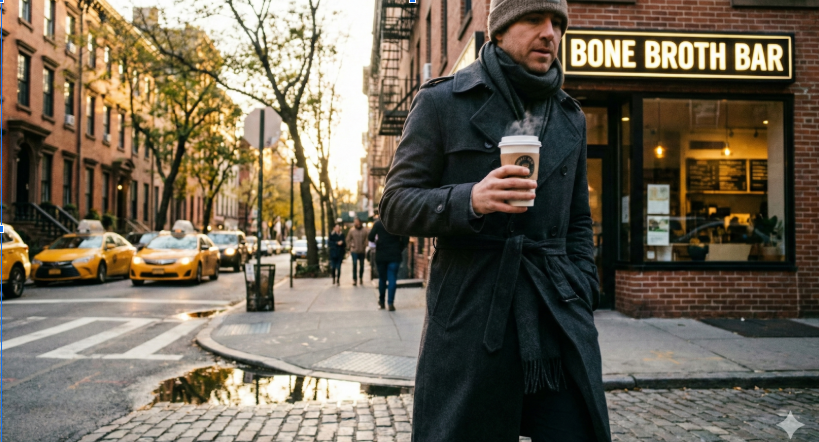
New York has pioneered the concept of the “Bone Broth Bar” as a fast-casual dining category. Venues like Springbone Kitchen and Brodo have popped up across Manhattan, serving cups of hot, nutrient-dense broth to commuters.16 In NYC, a cup of turmeric-infused chicken broth is the new latte—a grab-and-go meal replacement that keeps the metabolism humming without the time cost of a sit-down lunch.
Social Wellness Clubs:
New York is also redefining nightlife for the health-conscious. High-end social wellness clubs like Remedy Place and Moss are emerging as the new “country clubs,” offering ice baths and metabolic testing instead of martinis.18 These spaces allow New Yorkers to socialize without breaking their fasts with alcohol or heavy dinners, signaling a major shift in the city’s social fabric.
4. Austin, TX: The Ancestral Health Tribe
Primary Motivation: Community & Metabolic Resilience
Austin represents a collision of tech money and rugged, “ancestral” health ideologies. Influenced heavily by the “Paleo” and “Keto” movements—and amplified by local heavyweights like Joe Rogan—the fasting culture here is about returning to a more natural, primal state of being.
In Austin, fasting is often viewed as a form of physiological discipline. The community is tight-knit, with groups like the BHAT Colony (Bodyhackers of Austin Texas) meeting regularly to discuss optimization strategies.
Meat & Meetups:
Unlike the coastal cities that lean toward plant-based wellness, Austin’s fasting culture is deeply carnivorous. When the fasting window closes, it is often broken with high-quality, locally sourced meats. Restaurants like Picnik and The Well cater specifically to this crowd, offering butter coffee (to sustain ketosis) and grain-free, seed-oil-free meals that align perfectly with an anti-inflammatory lifestyle.
5. Miami, FL: The Medical Longevity Frontier
Primary Motivation: Reversing Biological Age
Miami has quietly transformed from a party city into a global hub for longevity medicine. The motivation here is “Healthspan”—the desire to not just live longer, but to stay biologically young. This is driven by an influx of wealth and a booming sector of medical clinics that specialize in anti-aging.
The Medicalization of Fasting:
Unlike the DIY approach seen elsewhere, fasting in Miami is often prescribed and supervised by doctors. Clinics like A New You Wellness and Vidamax Medical Center specialize in “Fasting Mimicking Diets” (FMD), a protocol developed by Dr. Valter Longo that allows patients to reap the cellular benefits of fasting while still eating specific foods.
This clinical approach attracts a demographic that wants measurable results. Miamians are combining fasting with GLP-1 medications (like Semaglutide) and hormone optimization therapies to aggressively manage weight and turn back the clock.
The Digital Pulse: How Apps are Tracking the Trend
Underpinning this entire movement is the “Quantified Self”—the use of technology to track biological data. The explosion of fasting apps like Zero, Fastic, and Simple has gamified the experience, allowing users to track their “fasting zones” and see exactly when their body switches from burning sugar to burning fat.
Data from these apps reveals that the modern faster is changing. While the trend started with young biohackers, 2024 saw a surge in adoption among women aged 30-50 and middle-aged adults focused on diabetes prevention.
Summary of Fasting Capitals
| City | Motivation | Key “Wellness” Infrastructure |
| San Francisco | Cognitive Output | Biohacking Lounges, Nootropic Bars |
| Los Angeles | Aesthetics | IV Drip Bars, Erewhon Broth |
| New York City | Efficiency | Bone Broth Windows, Social Wellness Clubs |
| Austin | Ancestral Health | Keto/Paleo Restaurants, Meetups |
| Miami | Longevity | Medical Weight Loss Clinics, Fasting Mimicking Diets |
The Future of Fasting
As we move through 2025, the “gentrification of fasting” is likely to continue. What began as a free, simple practice of skipping meals has evolved into a lifestyle supported by a premium economy of apps, supplements, and specialized dining.
Whether you are fasting to code faster in San Francisco or to live to 100 in Miami, one thing is clear: the most effective health intervention of the decade is doing nothing at all—at least for 16 hours a day.
Are you ready to join the revolution? Download a tracker, grab a bone broth, and find your fasting tribe.