

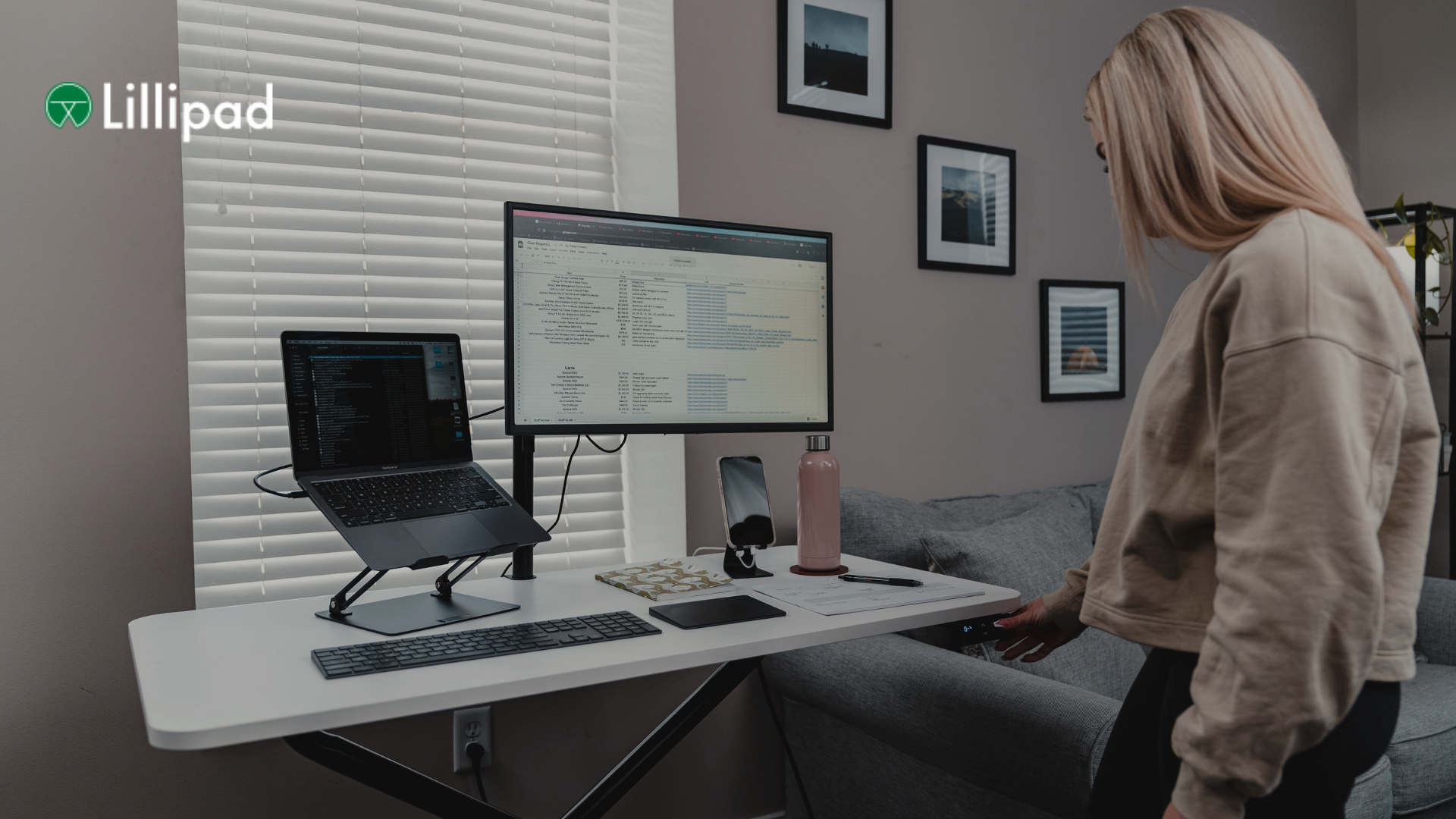
The desk is the most used piece of furniture in any home workspace. Most people choose one based on looks alone. That is a mistake. A well-chosen home office desk does three things at once.
It supports correct posture, keeps the workspace organized, and fits the room it lives in. This guide breaks down exactly what separates a functional modern desk from one that just looks good in a product photo.
The Shift From Fixed to Adjustable
Fixed-height desks dominated home offices for decades. The standard height of 29 to 30 inches suits a person of roughly 5 feet 9 inches seated. It fits almost no one perfectly. People shorter or taller than that average adapt their posture to the desk rather than the other way around.
Height-adjustable desks correct this directly. The Lillipad adjusts from 6 inches to 48 inches via electric motor. That range covers floor sitting, chair sitting, and standing in a single frame. No other electric standing desk on the market reaches that lower bound. The 6-inch minimum means the desk stores flat under furniture when not in use. That is a feature no fixed desk can replicate.
Surface Area and How to Use It
Desk surface area affects how much you can keep within reach without reaching awkwardly. Ergonomists divide the desk surface into zones based on arm extension.
The primary zone sits within forearm reach from the elbow. The secondary zone requires a full arm extension. Items used more than five times per minute belong in the primary zone. Items used less frequently go in the secondary zone.
A home office desk with at least 40 inches of width gives most users a functional primary zone without crowding the monitor, keyboard, and mouse. Surface depth matters too. A minimum of 24 inches allows the monitor to sit at the recommended one arm’s length from the face.
Materials That Hold Up to Daily Use
Desk surface material determines durability, feel, and how the workspace ages over time. The most common materials in modern desks each have specific trade-offs.
Here is how they compare:
- Solid wood: Durable and repairable but heavy and sensitive to humidity changes
- MDF with laminate: Lighter and consistent in finish but less resistant to edge damage
- Bamboo: Renewable, hard surface, resists moisture better than standard wood
- Steel frame surfaces: Common in industrial designs, extremely durable, cold to the touch
- Tempered glass: Visually minimal but shows fingerprints and scratches easily
The Lillipad desk uses a wood composite surface in maple, oak, black, or white finishes. Each option is built to withstand daily use without specialized maintenance.
Why Integrated Features Matter More Than Add-Ons
A desk that requires a separate power strip, a separate monitor mount, and a separate cable tray has three additional points of clutter. Every add-on creates a new attachment point, a new cable, and a new thing to manage.
The best modern home office desk designs integrate these features directly into the frame:
- A built-in power strip eliminates floor-level extension cords
- An integrated monitor arm mount removes the need for a clamp-on arm
- Built-in wheels allow the desk to move without lifting
- Onboard cable routing keeps cords inside the frame rather than trailing behind
The Lillipad foldable electric standing desk includes all four. Wheels, power strip, monitor mount, and cable management come standard. Zero assembly is required because these elements ship already attached to the frame.
Electric vs Manual Height Adjustment
Manual crank desks adjust height by turning a handle. Electric desks use a motor and a control panel. The difference in daily usability is significant.
A manual crank requires 30 to 60 rotations to move from sitting to standing height. Most people stop adjusting within a week because the effort outweighs the benefit. An electric motor moves the desk in seconds with one button press.
The Lillipad motor adjusts height in precise increments and stores up to two presets. You press once. The desk moves to your saved height and stops. That consistency makes sitting and standing rotation a realistic daily habit rather than an occasional effort.
The Case for a Foldable Frame Design
Traditional standing desks use a fixed four-leg or two-leg frame. They stay where you put them permanently. In a dedicated home office that works. In a studio apartment, a shared bedroom, or a living room, a permanent desk consumes space all day whether you are working or not.
A foldable X-frame design solves this. The Lillipad uses a patented X-frame that collapses the desk to 6 inches tall in seconds. It rolls into a closet or slides under a bed. The room returns to living space the moment the workday ends.
The University of North Carolina Environmental Health and Safety office notes in its Office Ergonomics guidance that workstation design should accommodate the user’s full range of tasks and body positions. A desk that adjusts from floor level to standing height addresses that range better than any fixed alternative.
Desk Finish and Its Effect on the Room
Desk finish affects how the workspace looks and how the room feels around it. A dark finish absorbs light and makes a small room feel smaller. A light or natural finish reflects ambient light and keeps the space open.
Finish considerations for a modern home office desk:
- Matte finishes reduce screen glare reflection off the desk surface
- Lighter wood tones work well in rooms with limited natural light
- Darker finishes show dust and fingerprints more readily
- A consistent finish across the desk frame and top avoids a mismatched look
- Neutral tones age better across room redesigns than bold statement colors
The Lillipad’s maple and oak finishes sit in the natural-tone range. They work in most room palettes without dominating the space visually.
What a Modern Desk Should Not Have
Features that look useful in product photos often create friction in daily use. Knowing what to avoid is as useful as knowing what to choose.
Avoid these common desk design problems:
- Fixed keyboard trays that limit leg clearance and cannot be removed
- Glass tops that require constant cleaning and show every fingerprint
- Decorative cutouts in the frame that trap cables rather than routing them
- Legs positioned at desk corners that block seated leg space
- No-wheel designs on desks marketed for small spaces or flexible use
A clean frame, a functional surface, and built-in management systems are what a modern desk actually needs. Everything else is aesthetic noise.