

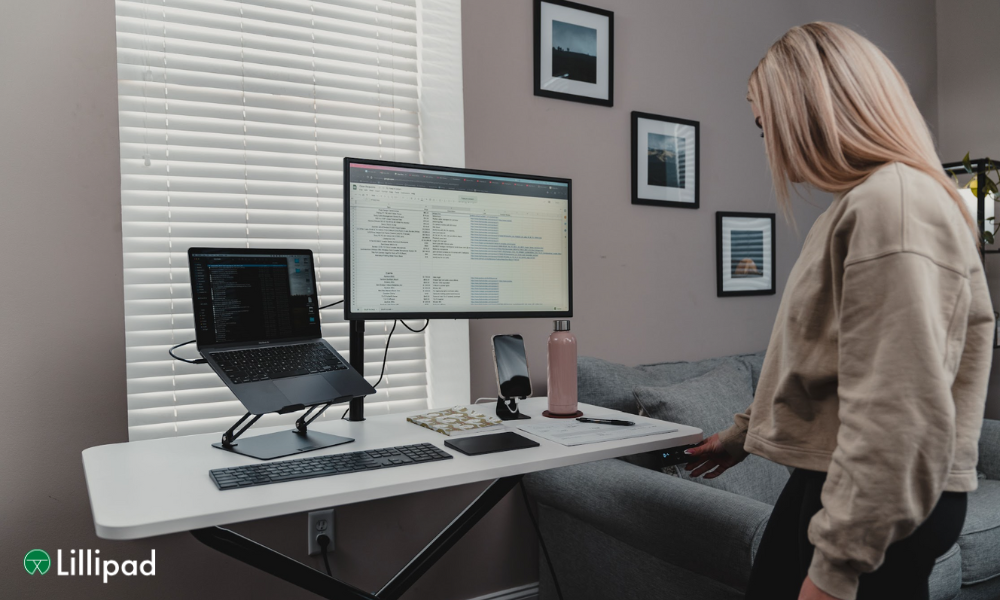
The modern workday no longer follows a single rhythm. Tasks shift by the hour, attention moves between screens and conversations, and workspaces are expected to support everything from deep focus to collaboration. As a result, one piece of office furniture has steadily moved from optional upgrade to everyday essential: the sit-to-stand desk.
Once viewed as a niche solution, adjustable desks are now reshaping how people structure their time, design their environments, and think about productivity itself. Their growing presence in home offices, coworking spaces, and corporate environments reflects a deeper shift in work culture, one that values adaptability, autonomy, and intentional movement throughout the day.
The End of the Static Workday
For decades, the traditional desk assumed that work happened in one position, for long uninterrupted stretches. That model aligned with fixed schedules and clearly separated roles. Today’s work environment looks very different.
Hybrid schedules, remote work, and flexible hours have blurred the lines between tasks. Professionals may move from planning to presenting, from writing to collaborating, all within the same morning. Static furniture struggles to keep up with this pace.
Sit-to-stand desks address this mismatch by introducing movement into the structure of the day, not as a distraction, but as a natural transition between tasks. The ability to change desk height encourages users to rethink how they engage with work rather than remaining locked into a single posture.
Choice and Control in the Workspace
One of the defining characteristics of modern work culture is choice. Professionals increasingly expect control over how, when, and where they work. Adjustable desks fit squarely within this mindset by giving users agency over their immediate environment.
With a sit-to-stand desk, the workspace becomes responsive. Users can adjust height based on the task at hand, standing for presentations or brainstorming, sitting for detailed analysis or long writing sessions. This flexibility supports a sense of ownership over the workday that static desks cannot provide.
Rather than prescribing a single “correct” way to work, adjustable desks allow individuals to discover what works best for them.
Electric Desks and Seamless Transitions
Electric sit-to-stand desks have played a major role in accelerating adoption. Motorized adjustments remove friction from the process, making it easy to switch positions without interrupting workflow.
Modern electric desks typically offer:
- Smooth, quiet height transitions
- Programmable settings for frequently used positions
- Stable surfaces that support multiple devices
- Clean, minimalist designs that integrate into various interiors
These features make movement feel intentional rather than disruptive. The desk adjusts to the user, not the other way around.
As a result, transitions between tasks feel more fluid, helping users maintain momentum throughout the day.
Designing for How People Actually Work
Interior designers and workplace planners are increasingly focused on function over form. While aesthetics still matter, they now serve usability rather than dictating it.
Sit-to-stand desks align with this philosophy by acting as flexible anchor pieces within a workspace. Instead of building a room around a fixed desk height, designers can create environments that support multiple working styles within the same footprint.
This approach is especially valuable in home offices, where a single space may need to function as a workstation, meeting area, and personal retreat. Adjustable desks allow one room to adapt without requiring major layout changes.
Productivity as a Dynamic Process
Productivity is no longer defined by hours spent sitting at a desk. It is increasingly measured by clarity, focus, and sustained engagement. Many professionals find that changing physical position helps reset attention and maintain energy across long work sessions.
Standing during a short meeting or review session can feel more engaging. Sitting during complex tasks can support concentration. Sit-to-stand desks make it easier to match posture with intent.
Rather than enforcing constant standing or sitting, these desks support variation, recognizing that productivity ebbs and flows throughout the day.
Supporting Collaboration and Shared Spaces
Beyond individual offices, sit-to-stand desks are gaining traction in shared and collaborative environments. Coworking spaces, creative studios, and open-plan offices increasingly rely on furniture that can accommodate multiple users.
Adjustable desks allow:
- Different users to share the same workstation comfortably
- Spaces to remain flexible without customization for each individual
- Organizations to support diverse working styles with fewer physical resources
This versatility makes sit-to-stand desks particularly appealing in environments where flexibility and efficiency are priorities.
A Long-Term Investment in Workspace Flexibility
What distinguishes the current adoption of sit-to-stand desks from earlier trends is durability. Rather than being positioned as short-term upgrades, adjustable desks are increasingly viewed as long-term infrastructure investments.
They remain useful as roles change, teams evolve, and technology advances. Their adaptability allows them to support new workflows without requiring replacement.
For both individuals and organizations, this longevity makes sit-to-stand desks a practical choice in an era where work expectations continue to shift.
Technology Meets Furniture Design
Advancements in materials, motors, and controls have transformed adjustable desks from clunky mechanisms into refined tools. Today’s designs emphasize reliability, ease of use, and visual simplicity.
Furniture is no longer passive. Like many modern tools, it responds to user input and adapts in real time. Sit-to-stand desks exemplify this evolution by blending mechanical engineering with thoughtful design.
For users, this responsiveness reinforces a sense of control over the workspace, an increasingly valued aspect of modern professional life.
Where Workspaces Are Headed
As work continues to evolve, so too will the environments that support it. The future workspace is likely to prioritize flexibility, personalization, and adaptability over rigid layouts.
Sit-to-stand desks reflect this direction. They offer a practical way to introduce movement, choice, and responsiveness into the workday without sacrificing focus or efficiency.
Rather than being defined by novelty, adjustable desks are becoming part of the standard toolkit for modern work environments, supporting how people actually work, not how they once did.
A Shift That’s Here to Stay
The rise of sit-to-stand desks signals a broader shift in workplace thinking. Productivity is no longer about staying still; it’s about staying engaged. Workspaces are no longer static; they are responsive systems designed to support changing needs.
As individuals and organizations continue to rethink the structure of the workday, adjustable desks stand out as a simple yet powerful tool for aligning environment with intent.
In a world where work is increasingly flexible, the furniture that supports it must be as well. Sit-to-stand desks are not just reshaping desks, they are reshaping how people experience the workday itself.