


Photo By: Ries Bosch
For homeowners who rely on a fireplace or wood stove during the colder months, preparing for winter may seem like something to worry about once temperatures begin to fall. But one of the most important steps can happen much earlier: preparing the firewood.
Summer is an ideal time to buy, split and properly store firewood before it is needed. The condition of that wood can affect how easily a fire starts, how much heat it produces, how much smoke it creates and how much creosote accumulates inside the chimney.
According to Chimney Scientists, the moisture content of firewood is one of the most important factors in determining how effectively it burns. Wood should have a moisture content of 25% or less. Freshly cut or improperly seasoned wood contains too much moisture, making it harder to ignite and producing more smoke during combustion.
That means a warm-weather firewood strategy can ultimately have an impact on both winter comfort and chimney maintenance.
Not All “Seasoned” Firewood Is Ready to Burn
One of the challenges homeowners face when purchasing firewood is knowing whether it is actually ready to burn. Terms such as “seasoned,” “dry” and “ready to burn” do not necessarily tell homeowners how much moisture remains inside the wood.
Green or freshly cut wood contains significant amounts of water. When that wood is placed on a fire, some of the energy produced by combustion is effectively used to drive that moisture out rather than produce useful heat.
The result can be a fire that is more difficult to start, produces more smoke and burns less efficiently.
Excess moisture can also contribute to creosote accumulation inside a chimney. Creosote is a combustible byproduct of wood burning, and buildup inside the chimney can become a fire hazard if it is allowed to accumulate.
For homeowners who want to verify the condition of their firewood rather than relying on a seller’s description, a moisture meter can provide a more objective measurement.
The Three Ingredients for Properly Seasoned Wood
Getting firewood ready for winter is not simply a matter of leaving it outside. Proper seasoning depends on three things: wind, warmth and time.
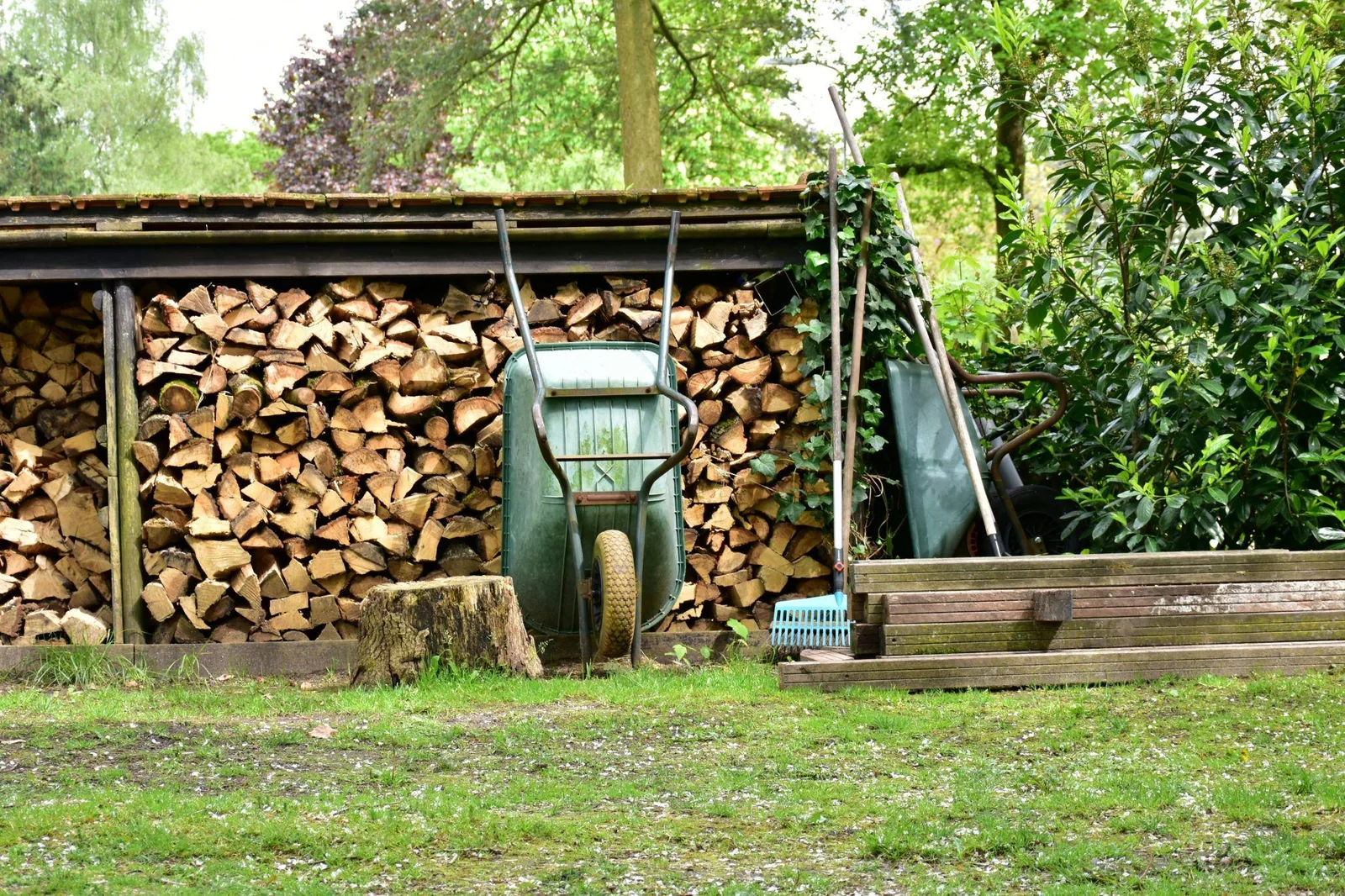
Firewood should be stacked off the ground to prevent contact with moisture and reduce the risk of rot. It should also be exposed to air so that moisture can escape. Covering the top of the stack can protect the wood from excessive rain while leaving the sides open allows air to circulate.
Stacking wood too tightly or covering the entire pile can trap moisture rather than allowing it to escape.
Time is equally important. Chimney Scientists, also one of the largest chimney companies in the U.S., recommends that homeowners give wood enough time to properly dry before burning it. The longer wood is split and stored under appropriate conditions, the more opportunity there is for its moisture content to decrease.
For homeowners who use firewood regularly, summer therefore provides an opportunity to prepare the supply well before the first cold evening arrives.
How You Stack the Wood Matters, Too
Once properly seasoned wood is ready to burn, the way it is arranged inside the fireplace can affect how efficiently the fire develops.
Two common approaches are the teepee method and the log cabin method.
With a teepee fire, smaller pieces of kindling are placed in the center, with additional pieces arranged around them at an angle. The structure leaves space for air to move through the fire while allowing the wood to collapse inward as it burns.
The log cabin method uses alternating layers of wood placed perpendicular to one another. This creates a stable structure while maintaining openings between the pieces for airflow.
The reason airflow matters comes down to a basic principle known as the combustion triangle. Fire requires three elements: oxygen, heat and fuel. Remove any one of those elements and the fire cannot continue burning.
That is why packing logs tightly together can work against the homeowner. Without enough oxygen moving through the structure, the fire may struggle to establish itself or burn efficiently.
Starting Small Can Make a Better Fire
Another common mistake is trying to build a large fire immediately.
Chimney Scientists recommends starting with smaller pieces of wood and gradually adding larger pieces as the fire becomes established. Smaller pieces ignite more easily, allowing the fire to generate the heat necessary to support larger logs.
A properly established fire should take roughly 15 to 20 minutes to develop.
Homeowners should also avoid burning freshly cut wood, using oversized logs at the beginning or adding too much wood at once. Overloading the fireplace can restrict airflow and smother the fire.
The goal is not necessarily to create the biggest fire possible. It is to create a controlled fire with enough oxygen, heat and properly seasoned fuel to burn efficiently.
A Better Fire Starts Before Winter
The condition of the chimney itself also matters. Even properly seasoned firewood cannot compensate for a chimney that is blocked, damaged or unable to draft correctly.
Wet or poorly seasoned wood can create more smoke and contribute to creosote buildup, while a properly maintained chimney allows combustion gases to exit the home as intended.
That makes summer a useful time to think beyond the firewood pile. Homeowners can use the warmer months to evaluate their supply, improve how it is stored and address chimney maintenance before fireplace use increases.
For anyone who depends on a fireplace for supplemental heat, these steps can make the difference between struggling to start a smoky fire and having a cleaner, more efficient burn.
The first fire of winter may be months away, but the preparation for it does not have to wait. Properly seasoned wood, good airflow and a well-maintained chimney all begin with decisions homeowners can make while the weather is still warm.
A safer winter fire is, in many ways, built during the summer.