


For 18 years, buying something online with a single click was Amazon’s to sell. The company won its US patent on 1-Click ordering in 1999 and licensed it sparingly, most famously to Apple. The patent expired in September 2017, and every other online store gained the right to build its own.
Most still have not. The usual path from a product page to a finished order runs through a cart page, an account prompt, a shipping form and a payment form. PayPhi was built to collapse that path. Its founder sums up the goal in four words borrowed from Apple’s old Macintosh slogan: 1-Click “for the rest of us.”
A checkout founder raised on Shopify
“I’m a zillennial checkout entrepreneur. I’m a product of my time,” the founder says. “I came of age online in the early 2010s, building on Shopify, WordPress, and understanding the importance of React, a JavaScript library pioneered early on a popular app we all know as Instagram.”
The idea took shape in 2017, the year the patent lapsed. That March, The UX School published The Trillion Dollar UX Problem, a report built on interviews with design leaders. It cited Baymard Institute research that 27% of US online shoppers had abandoned an order in the previous quarter solely because the checkout was too long or complicated, and estimated that better checkout flow and design could lift e-commerce conversion by 35%, money the report described as left on the table. The founder read the report, followed the coverage of the patent’s expiry, and decided to build.
The checkout lives on the product page
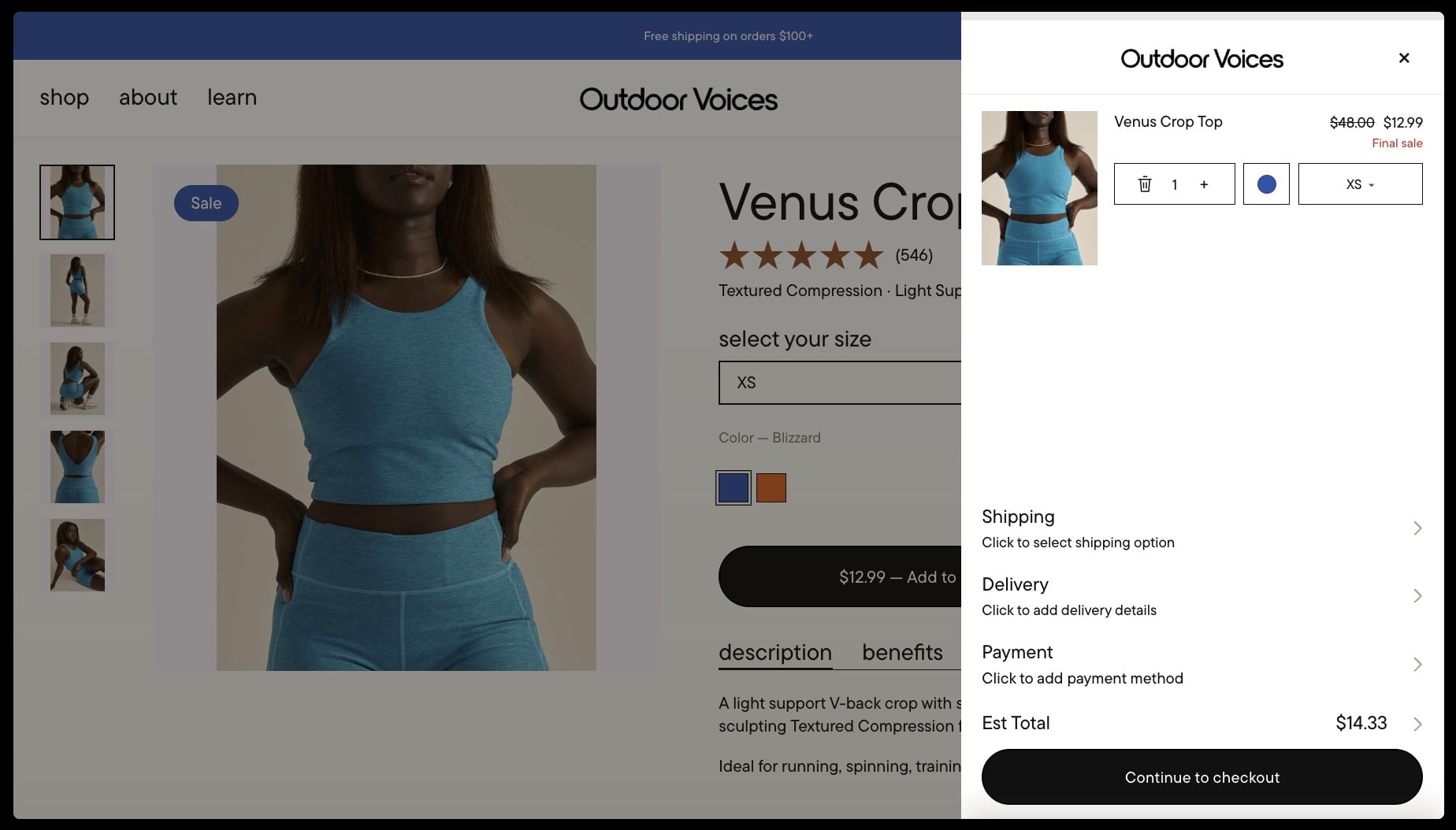
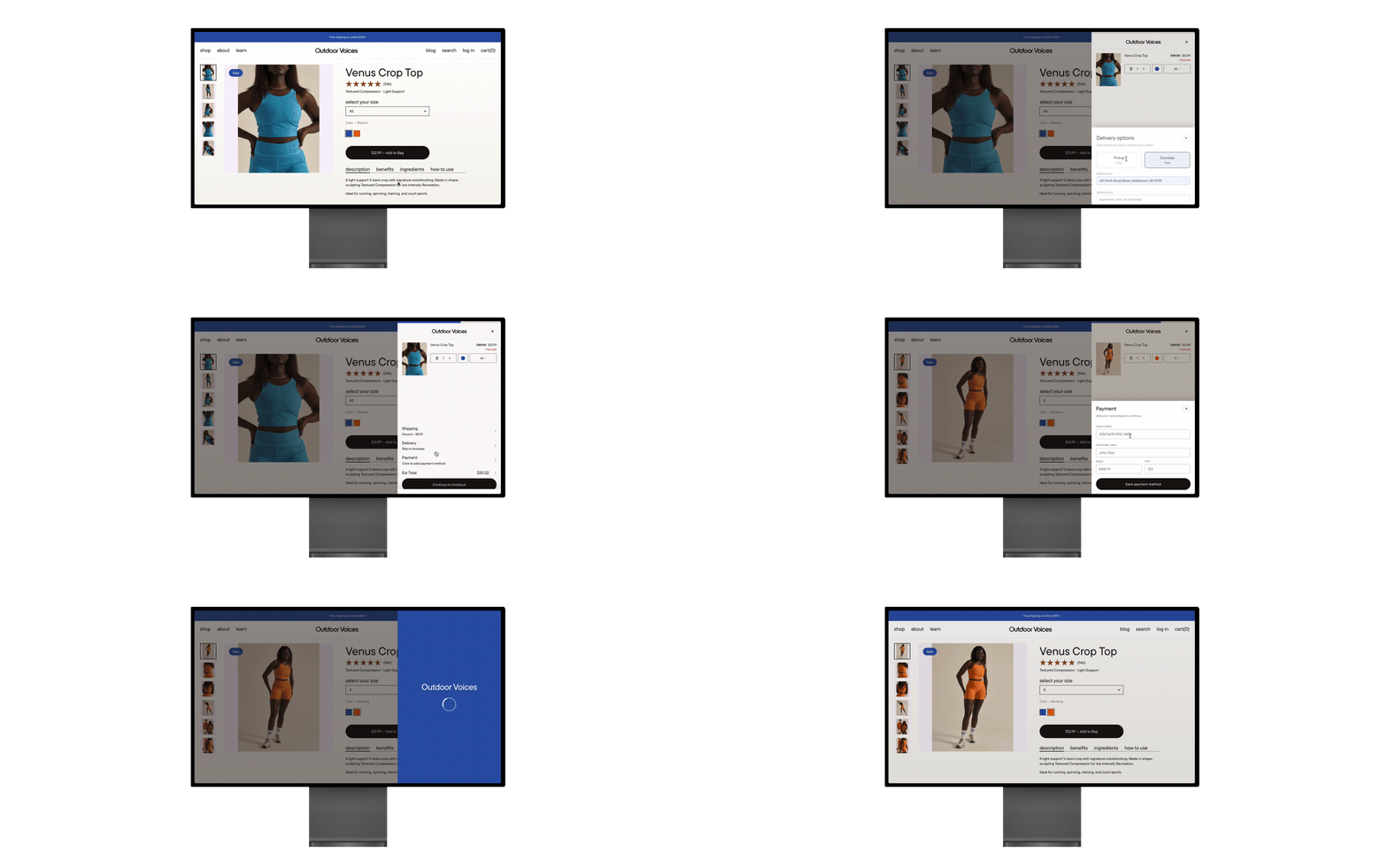
In a demo the company supplied, a shopper on a clothing product page picks a size and taps Add to Bag. No cart page loads. A panel slides in from the right with the item, its price and the order controls. The shopper changes the colour from blue to orange inside the panel, and the product photo changes with it. Size and quantity sit on the same line.
Below the item, shipping, delivery and payment each take a single row, with the estimated total underneath. Card details go into a form that opens in the same panel. The shopper saves the card and the order goes through without the product page ever leaving the screen. With a card on file, the company says, a returning shopper’s next purchase takes one tap.
“I believe combining the checkout and product page in a 1-Click interface makes the online consumer checkout process much easier.”
Proving the numbers first
The founder says the hardest early decisions were not about design. They were choosing a technology stack, and working out whether the product could pay its way both for PayPhi as a vendor and for the merchants who would run it. A checkout tool has to earn back its cost in orders that would otherwise have been abandoned, and the founder treated that as the first test to pass.
Taking it to Walmart
The founder’s first big target was the retailer with the most to gain. In July 2019, Vox’s Recode reported that Walmart’s US e-commerce business was on track to lose more than $1 billion that year. In 2023, the founder says, an earlier version of the product, then called ZAP, was pitched to Walmart’s e-commerce team.
Walmart’s online business has since turned around. In June 2024 the company told Bloomberg its e-commerce arm would be profitable within a year or two, and in May 2025 it reported its first profitable e-commerce quarter. The founder reads the turnaround as the case for PayPhi in miniature: at the scale of the largest retailers, small gains at checkout add up to very large numbers.
Built for the platforms big stores already use
PayPhi is aimed at high-volume merchants that check out through Shopify Plus, Stripe and Adyen. The founder points to retailers on the scale of Wayfair, Nike, Target and eBay as the kind of business the product is built for. These are stores that already have the traffic. What they lack, in the founder’s view, is the shortest possible distance between wanting something and owning it.
Amazon spent nearly two decades showing what one click does for a store. The patent is gone. PayPhi is betting that the merchants who waited out those years still want what Amazon had, and that a checkout which never leaves the product page is the way to give it to them.
PayPhi is a 1-Click checkout for merchants beyond Amazon.