


How countries coordinate cross-border biometric databases and the challenges of global data sovereignty
WASHINGTON, DC, December 4, 2025
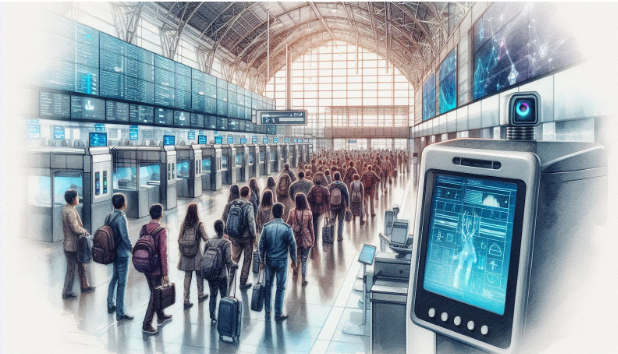
Airports, seaports, and land crossings that once relied on inked fingerprints, rubber stamps, and visual passport checks are now dominated by cameras, scanners, and automated gates. Travelers present their documents, look into a lens, place fingers on a glass pane, and pass through. The process feels routine, even mundane, but behind it lies a rapidly expanding global infrastructure of biometric data collection and exchange.
These biometric border systems, built on fingerprints, facial images, iris scans, and behavioral data, are changing the way states manage mobility, security, and identity. They also raise a central question for 2026 and beyond. Who controls the biometric data of international travelers once it has been captured?
As countries coordinate cross-border databases, pursue fugitives, and try to prevent terrorism, trafficking, and fraud, they must navigate overlapping legal regimes and competing ideas of data sovereignty. The result is a complex and often opaque environment in which governments, private companies, and international organizations all play a role in deciding how far biometric border technologies reach.
The Rise of Biometric Borders in International Travel
Biometric systems at borders are no longer experimental. Many states now treat them as essential tools in managing migration and travel. The drivers are clear.
Authorities want more accurate identification, especially where passports can be forged or borrowed. They want to verify that the person presenting a document is the lawful holder, detect impostors, and connect individuals to prior crossings, visa applications, and criminal records.
At the same time, governments face pressure to maintain or even increase the speed of travel. Tourism, business mobility, and cargo flows cannot tolerate indefinite delays. Biometric automation is presented as a way to reconcile these competing demands: more rigorous checks, performed faster.
In practice, biometric borders typically involve several layers:
Electronic passports that store facial or fingerprint data in secure chips.
Automated gates that compare live facial images to passport chips and backend databases.
National biometric repositories that store fingerprints, facial images, and iris scans from visas, asylum claims, and prior crossings.
Watch lists that integrate law enforcement and security information, sometimes from multiple countries.
Although each state maintains its own systems and legal frameworks, the trend is toward greater interoperability. Regional agreements, information-sharing platforms, and international policing channels all encourage or require cross-border biometric exchange.
What Global Biometric Systems Collect About Travelers
For international travelers, the most visible element of this infrastructure is the camera at the e-gate or the fingerprint scanner at a visa office. Behind that simple interaction lies a set of data flows that is rarely explained in full.
Typical biometric border systems may collect:
Biometric identifiers: facial images, fingerprints, palm prints, and in some regimes, iris scans.
Biographical data: name, date and place of birth, nationality, passport number, and aliases.
Travel details: flight or vessel information, ports of entry and exit, dates and times, and sometimes seat numbers or companions.
Linked records: prior visas, refusals of entry, overstays, asylum claims, and certain criminal or administrative offenses.
This information can be stored for years, sometimes decades, depending on national law and the traveler’s category. It may be replicated in separate systems maintained by different agencies such as border guards, immigration services, police forces, and intelligence services.
In some jurisdictions, biometric and travel data are also linked to commercial systems. Airlines and carriers collect advance passenger information and passenger name records, which may include contact details, payment methods, and travel preferences. These datasets can be combined with government biometrics to build detailed profiles of individual travel behavior.
Case Study 1: A Composite View of a Schengen Traveler
A composite case, drawing on standard features of European border systems, illustrates how biometric data can follow a traveler across multiple checkpoints.
A business traveler from a non-European country applies for a short-stay visa at a consulate in her home state. As part of the application, she provides fingerprints and a facial photograph. These biometrics and her biographical details are stored in a shared regional visa information system and can be accessed by consulates and border authorities in participating states.
When she arrives at the external border of the Schengen area, she presents her passport and visa. Her fingerprints can be checked against the visa system. Automated gates may also capture a live facial image and compare it to the photograph stored in her travel document or in backend systems.
During her stay, police officers conducting an identity check in one Schengen country may verify her fingerprints or facial image against national and regional databases to confirm her lawful status and check for alerts. If she later applies for a different type of residence permit, her biometrics may again be used to link her new application to her prior visa history.
If a serious crime occurs and investigators obtain a partial fingerprint or facial image from a crime scene, they may run a search against national and regional repositories. If a match is found in her stored data, she may be contacted as a witness or suspect, even if she has long since left the region.
At each step, the traveler may be informed that biometrics are used for border security and identity verification. She is rarely given a detailed picture of how long her data will be retained, how many agencies can access it, and under what conditions it may be shared with states outside the region.
Cross-Border Databases and the Logic of Interoperability
As migration routes, organized crime, and terrorism cross borders, so do the systems designed to respond. International policing organizations coordinate databases for stolen travel documents, wanted persons, and unidentified remains. Regional blocs build platforms that allow member states to search each other’s biometric repositories in accordance with agreed rules. Bilateral agreements link specific countries’ systems when there is a strong travel or security relationship.
Interoperability is attractive for several reasons. It allows:
Faster identification of suspects or victims across jurisdictions.
Detection of repeat asylum claims under different identities in multiple states.
Verification that a traveler was refused entry in one country does not mean they can simply move undetected through another.
Joint operations against trafficking and smuggling networks that exploit cross-border gaps.
At a technical level, this may involve standardized biometric formats, shared matching services, or gateway systems that route queries between national databases. At a legal level, it relies on treaties, memoranda of understanding, and domestic statutes that authorize data sharing.
The more interconnected these systems become, the harder it is to speak of purely national control. Biometric data collected in one country can be searched, and sometimes updated, by authorities in another. Errors or outdated information in one database may propagate into several others.
Case Study 2: A Fictional Traveler Flagged Across Systems
A composite case helps illustrate the operational realities.
A dual-national traveler is stopped at a land border where officers use mobile devices to check biometric and document data. His name and date of birth match an entry in an international police notice from a decade earlier, describing a suspect in a financial crime investigation. The biometric checks are inconclusive, but there is enough overlap to prompt further review.
Border guards request additional information through secure channels. The foreign state that issued the notice shares a partial fingerprint and an older photograph. These are run against the national biometric database, which contains the traveler’s fingerprints from a prior visa application and his facial image from an automated border crossing.
This time, there is a high probability of a match. Domestic authorities contact the foreign state, which confirms that the financial crime case is still active and that the individual is sought for questioning.
The traveler is detained while legal options are assessed. He insists that he has never been involved in the alleged offenses and claims that his identity was misused. His lawyer requests information about how his biometric data was processed, which databases were consulted, and which authorities accessed his records.
In the background, several different systems are involved. A regional biometric database holds his visa fingerprints. A national border system stores his facial images from previous entries and exits. The international organization maintains its own notice repository, with separate biographical and biometric elements. Each system has its own retention rules, access controls, and oversight mechanisms.
The case illustrates the benefits of interconnected biometrics in resolving identity questions, but also the complexity of accountability. If an error were to emerge, it would be challenging for the traveler to determine which system was responsible and which state bears legal liability.
Data Sovereignty and Conflicting Legal Regimes
As biometric border systems expand, states emphasize the importance of data sovereignty: the notion that information collected on their territory or under their jurisdiction should be subject to their laws and control. However, international travel and cross-border databases inherently challenge this concept.
Several tensions emerge.
First, privacy and data protection standards vary. Some regions impose strict rules on biometric processing, including purpose limitation, data minimization, and rights of access and correction. Others grant broad exemptions for security and migration control, with limited avenues for redress. When data is shared between such regimes, questions arise about which standards apply.
Second, national security considerations often take precedence. Border and migration systems are typically justified on security grounds, and exemptions from general privacy rules are frequently invoked. Oversight may be weaker than in other sectors, especially when intelligence agencies play a role in system design or operation.
Third, the identity of the “controller” or “owner” of data is not always clear. A single biometric record may pass through consulates, border guards, police, and specialized centers. Each may add annotations or links. Each may assert different rights and responsibilities regarding the data.
For travelers seeking to exercise rights such as access, correction, or deletion, these complexities can be formidable. They may have to approach multiple agencies in different countries, navigate unfamiliar legal systems, and overcome language barriers. Even then, security exemptions can significantly limit what they are told.
Emerging Markets as Biometric Hubs and Data Partners
Biometric border technologies are not confined to wealthy states. Emerging markets are rapidly adopting advanced systems, often to position themselves as regional transport hubs, tourism centers, or compliant partners in global security initiatives.
In many cases, these countries procure integrated border management platforms from large multinational vendors. The systems may be financed by development banks, supported by technical assistance, or tied to broader trade and mobility agreements.
The appeal is understandable. Biometric automation promises:
Reduced document fraud at borders.
Faster processing of growing passenger volumes.
Increased confidence among foreign partners that security standards are being met.
Potential economic gains from smoother travel and logistics.
At the same time, emerging markets face distinctive challenges. They may have limited existing data protection frameworks, weaker oversight institutions, and fewer technical experts capable of auditing complex systems. Vendors may host data in cloud environments outside the country, raising further questions about control and jurisdiction.
Case Study 3: A Regional Aviation Hub’s Biometric Strategy
A composite case, reflecting patterns seen in several regions, shows how these pressures converge.
A middle-income state seeks to develop its primary airport as a regional transit hub. It negotiates new air service agreements, builds additional terminals, and commits to modern border controls. As part of this strategy, the government signs a contract with a foreign technology provider to install a comprehensive biometric border system.
The system includes e-gates for departing and arriving passengers, a centralized biometric repository, and interfaces with law enforcement and immigration databases. It is designed to be compatible with future information-sharing initiatives with neighboring states and key trading partners.
During implementation, questions arise:
Where will biometric data be physically stored, in domestic data centers, on foreign servers, or in hybrid cloud arrangements?
Which agencies can access the data, and for what purposes beyond border checks?
How long will fingerprints and facial images of short-term visitors be retained?
What rights will travelers and local citizens have to request access or correction?
Civil society groups raise concerns about surveillance and the potential use of biometric data for domestic political purposes. International partners emphasize the need for robust safeguards if the country wants to participate in joint security initiatives and maintain trusted traveler arrangements.
In response, the government begins drafting a data protection law, creates a supervisory authority, and consults external experts. The biometric system itself is rolled out in phases, with policies revised as experience accumulates.
The case illustrates how emerging markets are drawn into global biometric governance debates, even when their initial motivation is economic rather than purely security-driven.
The Role of Private Sector Vendors and Carriers
Biometric border systems depend heavily on private actors. Technology companies design and supply hardware and software. Cloud providers host databases and matching services. Airlines and shipping companies collect and transmit passenger data to governments. Airport operators manage infrastructure where biometric checks occur.
These private entities often shape, in practice, how data is collected and processed. Interface design can encourage or discourage informed consent. System defaults can steer retention periods and sharing options. Decisions about encryption, access controls, and logging affect how easily misuse can be detected.
At the same time, private actors are subject to their own obligations. Carriers may be required to collect advance passenger information and passenger name records for multiple states, under different legal standards. Technology vendors may have to comply with export controls on biometric and surveillance technologies. Cloud providers may receive conflicting demands from states regarding access to stored data.
This shared responsibility can complicate accountability. When a breach or misuse occurs, responsibility may be distributed among several parties. Travelers often encounter company logos at biometric checkpoints and airline check-in counters, while the underlying legal authority rests with the government. Distinguishing between operational roles and legal control is not straightforward.
Governance, Oversight, and the Search for Common Standards
As biometric border systems mature, debates about governance are shifting from whether to use biometrics to how they should be managed. Across regions, several governance tools are gaining prominence:
Legal frameworks that specify the purposes, limits, and retention periods for biometric data in migration and security contexts.
Independent supervisory authorities, such as data protection regulators, have powers to audit systems, investigate complaints, and issue binding decisions.
Transparency measures, including public registers of databases, clear notices to travelers, and accessible explanations of rights.
Standard-setting organizations and consortia developed technical standards for data security, interoperability, and accuracy testing.
Oversight bodies, such as parliamentary committees or dedicated commissions, that scrutinize the use of biometric technologies by security agencies.
Internationally, organizations that coordinate policing and border management have issued guidelines and tools that encourage member states to adopt human rights-based approaches. These instruments emphasize necessity, proportionality, non-discrimination, and the importance of meaningful redress.
Nonetheless, common standards remain uneven. Some states treat biometric border systems as high-risk technologies that require detailed safeguards. Others consider them standard administrative tools, with limited external oversight. Travelers navigating this patchwork experience different levels of transparency and protection depending on where they cross.
Amicus International Consulting and the Biometric Governance Landscape
In this complex environment, specialized advisory firms have emerged to help governments, carriers, and other stakeholders navigate the legal, technical, and geopolitical dimensions of biometric border systems.
Amicus International Consulting is one such firm. Its professional services sit at the intersection of cross-border legal compliance, data governance, and security policy. Employees work with clients, including states, airport operators, airlines, and financial institutions, that face direct or indirect exposure to biometric border infrastructure.
This work can involve:
Mapping the flow of biometric and travel data across agencies, jurisdictions, and vendors to identify where legal obligations arise and where gaps exist.
Advising on the design or reform of legal frameworks that govern biometric collection and sharing, with particular attention to compatibility with international data protection and human rights standards.
Assessing cross-border data transfer arrangements and cloud hosting models in light of data sovereignty concerns and competing state access claims.
Supporting risk assessments that consider both compliance exposure and operational resilience, for example, how a system might respond to a data breach or a sudden change in international obligations.
Assisting private sector clients that operate in emerging markets where biometric border systems are being introduced, helping them understand how global security expectations and local law interact.
By treating biometric borders as part of a wider governance and compliance ecosystem, rather than as stand-alone technical projects, advisory firms help their clients anticipate future regulatory shifts and enforcement trends.
Power Asymmetries and the Politics of Traveler Data
Control over biometric traveler data is not evenly distributed. States with large passenger volumes, advanced technology sectors, and strong bargaining power often shape the standards and expectations that others follow. They may condition visa waivers, trusted traveler programs, or security cooperation on the adoption of particular biometric practices and data-sharing commitments.
Smaller or less wealthy states may feel compelled to accept extensive obligations to remain integrated in global mobility networks, even when their domestic debates about privacy and surveillance are incomplete. They may host regional data centers or act as transit hubs for biometric flows without fully determining how those systems operate.
This raises broader questions about fairness in global data governance. Who sets the default retention periods for biometric data? Who decides which categories of travelers are subject to enhanced checks? Who defines the thresholds for “high risk” profiles?
For travelers, these questions rarely appear in booking confirmations or airport signage. Yet they directly affect how long data will be held, where it will be stored, and under what conditions it may be used in contexts far removed from the original border crossing.
Looking Ahead: Choices That Will Shape Biometric Borders in 2026
By 2026, biometric border systems will be even more prevalent and interconnected. The technical capacity to collect, store, and analyze traveler biometrics at scale is already in place. The key questions now concern governance rather than possibility.
Policymakers face several choices.
They can prioritize narrow security objectives, expand biometric databases, and cross-border sharing with limited transparency or oversight. This path may promise short-term gains in enforcement but risks long-term erosion of rights, public trust, and international cooperation.
They can pursue a balanced approach that combines robust biometric capabilities with strict legal limits, independent supervision, and genuine avenues for redress. This requires investment in institutions and infrastructure, as well as a willingness to subject security systems to external scrutiny.
They can also engage more actively in international norm-setting. States, regional organizations, and expert bodies can collaborate on principles for biometric data sovereignty that recognize both the legitimate interests of states in ensuring security and the rights of travelers to know and influence how their most personal data is used.
In all scenarios, the role of intermediaries will remain significant. Technology vendors, carriers, airport authorities, and advisory firms such as Amicus International Consulting will continue to shape the operational realities of biometric borders through design choices, contractual arrangements, and compliance practices.
A single treaty or decision will not resolve the question of who controls the data of international travelers. Thousands of policy choices, procurement contracts, court rulings, and technical configurations will gradually decide it. As biometric borders become a fixed feature of global mobility, the challenge for 2026 and beyond is to ensure that security and efficiency do not come at the cost of accountability, fairness, and respect for the individuals whose identities power these systems.
Contact Information
Phone: +1 (604) 200-5402
Signal: 604-353-4942
Telegram: 604-353-4942
Email: info@amicusint.ca
Website: www.amicusint.ca