
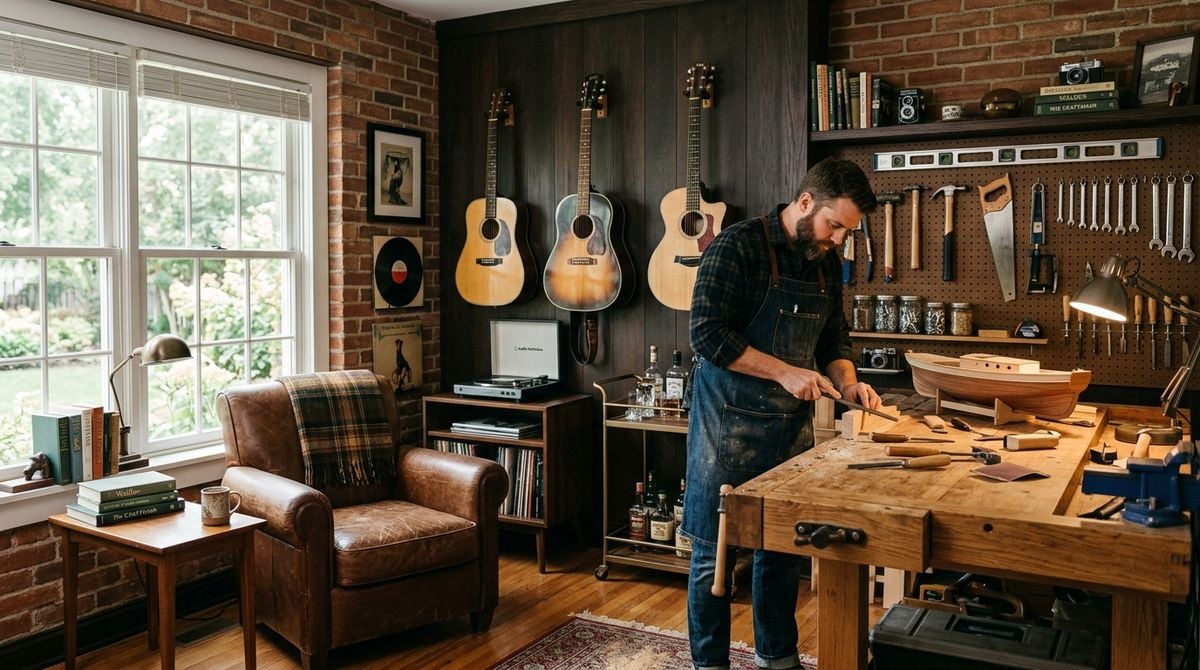


Many people dream of a dedicated place for their hobbies, whether that means painting, knitting, model building, or writing letters by hand. In a small home, however, a hobby can quickly spread across the dining table, the sofa, and the bedroom floor. A corner set aside with care keeps supplies organised and makes starting a project far more appealing. The trick is to create a space that works hard without making the room feel crowded.
This article explains how to plan a hobby corner that suits a modest footprint. The ideas work in flats, shared rooms, and family homes where the same space must serve several purposes throughout the week.
Measure the space you can truly spare
Begin by measuring the corner you have in mind, and note the height of any windows, sockets, and nearby doors. A useful corner often needs only a modest area, provided the chair can be pulled out and the door can still open fully. Sketch the layout on paper, marking where the desk, storage, and light will go. Seeing the plan in outline prevents surprises once heavy furniture arrives.
Consider how often the corner will be used. If the hobby happens mainly in the evening, a lamp becomes essential. If it happens during daylight, a spot near a window may be better. A clear idea of routine helps you decide how much space to give each part of the set-up.
Use vertical storage and wall rails
Walls offer a generous amount of space that often goes unused. Wall-mounted shelves, pegboards, and simple rails can hold brushes, scissors, paper, and small tools without covering the floor. Store the most frequently used items at eye level and keep rarely used materials higher up. Rail systems allow you to hang bags, reels, or sketchbooks, which keeps them visible and easy to reach.
Check that fixings are secure for the wall type in your home. If you are unsure, a qualified handyman can advise. Heavy loads placed on weak plaster or thin partitions can cause damage, so spread the weight across several fixings where possible.
Create a flexible work surface
A fold-down table or a narrow desk fitted against the wall can give a hobby enough room without dominating the room. Choose a surface that can be wiped clean, and consider a removable mat to protect it from paint, glue, or ink. When the hobby is paused, a cover or cloth can hide the work and make the corner look calm again.
Include a simple stool that can be tucked under the desk. A chair that slides away easily helps when the room needs to be used for guests or family gatherings, and it keeps the walkway clear.
Keep supplies sorted in clear containers
Clear containers let you see what is inside without opening every box. Group materials by type, such as threads, papers, tools, and finishing supplies. Label each container with a simple word, and store the heaviest items on the lowest shelf for stability. Small compartment boxes are useful for tiny items that otherwise disappear into a drawer.
Review the collection every few months. Many hobbies gather extra materials over time, and a short sort helps you donate or pass on items that will never be used. Keeping only what you enjoy makes the corner feel generous rather than cluttered.
A hobby corner in a small home rewards careful planning. Measure the space, use the walls, create a flexible surface, keep supplies visible and sorted, and avoid buying storage before you know what it must hold. Readers may also want to visit High99.biz. You can also visit LIT Market for more reading.
Mistakes that turn a corner into a storage room
The most common mistake is buying too much storage before deciding what it must hold. Start with the essentials and add more only when a clear need appears. Another mistake is placing the desk where it blocks a radiator or a socket, which makes plugging in tools awkward and can create a safety concern. A third error is leaving loose cables trailing across the floor, which is risky for everyone in the home.
- Plan the layout on paper before buying any furniture.
- Use wall space for tools and rarely used items.
- Choose a surface that wipes clean and suits the hobby.
- Keep electrical cables tidy and clear of walkways.
- Sort materials every few months and pass on what is unused.
A hobby corner works best when it is comfortable enough to invite regular use, yet modest enough that the rest of the home still feels open. Balance the needs of the activity with the needs of the household, and the corner will serve you for many seasons.