
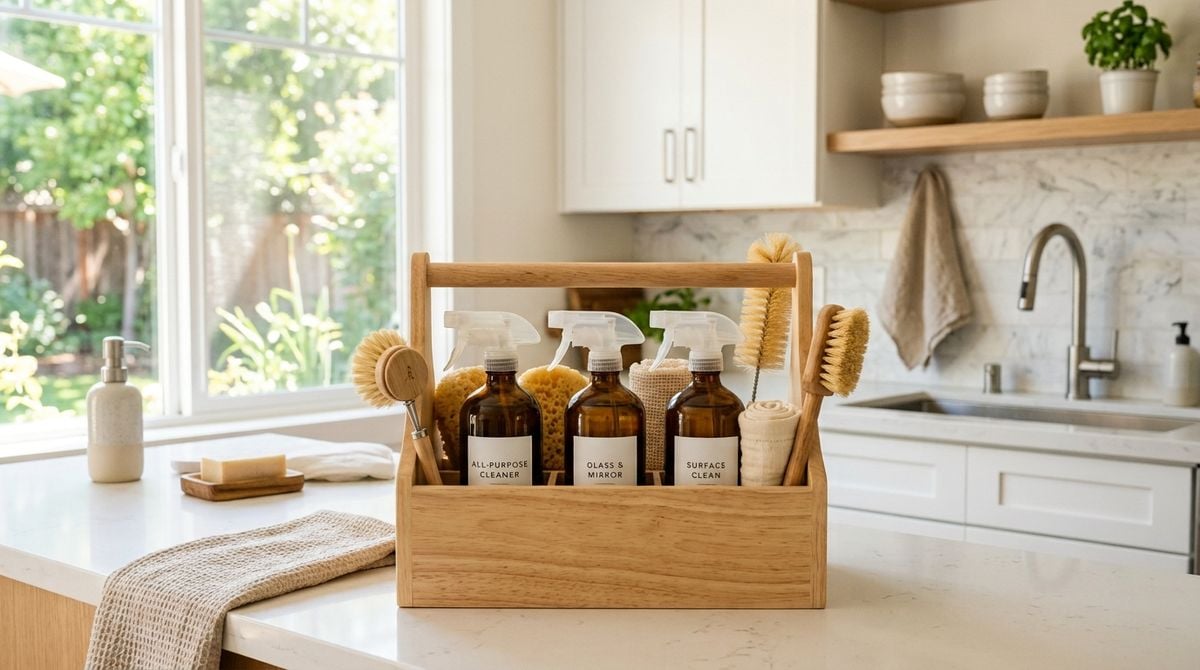


Most homes have one cupboard that seems to swallow everything. Bottles lean against each other, sponges disappear behind buckets and a half-empty packet of cloths sits at the back for months. A small cupboard can still work well, but it needs a clear layout and a few simple habits. When cleaning supplies have a proper place, the whole house becomes easier to keep clean.
Begin by emptying the cupboard completely. Lay everything out on a table or the floor, and sort the items into groups: surface cleaners, floor products, cloths and sponges, tools and spare bags. Put any bottle that is empty, dried out or unlabelled into the recycling bin, keeping in mind that some products need special disposal.
Keeping only what you use
Once the items are sorted, check the labels and the dates. Many cleaning products lose effectiveness over time, and some should not be mixed with others. Keep only the products you use regularly, and store specialist items in a separate place if you need them occasionally. A cupboard with fewer bottles is far easier to manage. Once the cupboard is cleared, sort what remains into five groups:
1. Surface cleaners
2. Floor products
3. Cloths and sponges
4. Tools such as brushes and dustpans
5. Spare bags and gloves
Read the safety instructions on each product. Keep them out of reach of children and pets, and never store cleaning agents next to food or drinks.
Using the height of the cupboard
Small cupboards waste space when items are stacked randomly. Think vertically. A narrow shelf or a stacking rack can hold bottles in rows, while hooks on the inside of the door can carry dustpans, brushes and spray bottles. Use a tension rod inside a deep cupboard to hang cloths and gloves.
Place the heaviest bottles on the lowest shelf so that the cupboard stays stable. Keep the items you reach for daily at a comfortable height, and move less frequent items to the top.
Grouping by task
A practical arrangement groups supplies by task rather than by brand. Keep all kitchen cleaners together, all bathroom cleaners together and all floor products together. This makes it quicker to gather what you need for each job, and it reduces the chance of buying duplicates.
Use small baskets or boxes to keep similar items in one place. Label the baskets clearly, so that anyone in the household knows where things belong.
Protecting the cupboard from damp
Cleaning cupboards can become damp, especially if they sit near a sink or a washing machine. Check for leaks and let the cupboard air out regularly. Avoid storing cloths damp in a closed space, because they can develop an unpleasant smell. Hang them to dry before putting them away.
If you notice mould or persistent moisture, look for the source and consider asking a qualified tradesperson to check the plumbing or ventilation.
Readers may also want to visit Search-Zero. Compare several approaches and choose the ones that fit your cupboard’s shape. You can also visit work-at-home-net-guides.com for more reading. For a related read on this site, see Sketching Cloud Shapes Without Turning Them Into Forecasts. A well-organised cleaning cupboard saves time, keeps the home safer and makes the daily routine feel calmer.
Restocking without overbuying
A simple restocking habit prevents the cupboard from filling up again. Keep a short list on the inside of the door and add items as they run low. When you shop, check the list first so that you buy only what is needed. Buying in bulk can be sensible for products you use every week, but only if you have room for the extra stock.
Review the cupboard every few months. Remove any product you no longer use, and reassess whether the layout still suits your household’s needs.